Showing posts with label Gadgets. Show all posts

Sunday, March 31, 2013

Planning to buy a cell Phone? why not Build it!

David Mellis is a graduate student in the High-Low Tech lab, a group of engineering has built a custom cell phone himself. In 2005, he helped found Arduino, a company that makes easy-to-program microprocessors and sells them on simple circuit boards. The idea is to help people make electronic products without needing a degree in computer science.


custombuiltcellphone


They're popular among hobbyists, hackers and the sort of people who end up working at the Media Lab but they're hardly mainstream. Mellis wondered if he could take the idea further  and build a cell phone. "The tricky thing is getting it beyond the people who are already doing electronics stuff," he says. So he decided to see if he could design consumer electronics that you can make yourself and actually use. He started with radios, speakers and computer mice before making the leap to the ultimate consumer device: cell phone.


I'm nervous at first – I've never soldered anything in my life. That makes me a good test subject, Mellis says. "I'm interested in trying to open up the process to people who haven't really done this stuff before," he says.


Soldering felt a little like doing a colour-by-numbers painting – I was filling in spaces on the circuit board, but my understanding of how the parts fit together was pretty sparse. And a lot of components were still out of my control. I used Mellis's software, for instance, which gives the phone capabilities similar to that of a 10-year-old Nokia phone: it can make and receive calls and texts, store up to 255 phone numbers, and has a clock.


The whole thing costs about $100 in parts, excluding the SIM card. Nearly all of the components came from online electronics or hobbyist shops, he says, and the instructions and source code are available on his website. However, the GSM module, which connects the phone to the cellular network and translates audio signals to the speaker and microphone, came from a Chinese e-commerce website.


The back of the phone has spaces for working parts: the GSM module; a microcontroller, which brings signals from the GSM module to the buttons and screen; a matchstick-sized antenna; and a SIM card holder. I bought the SIM card, with its month-to-month data-free plan, from the T Mobile store – connecting to the network is one thing I can't do myself.


When it was time to laser cut the case, I used Mellis's designs. That means my phone is identical to his prototype, which he has been using as his mobile phone for the past three months. The end result is a little coarse and chunky, but ends up about the size and thickness of my Android smartphone. I'm already thinking of ways to make it my own. I could knit it a case. I could paint it. I could design a new cover and have it laser cut myself.


I'm also thinking of ways I could use it. One of Mellis's labmates wants to make a phone with a single button for his grandma to call him. Another says that if she ever has kids, she'll give them a phone that only calls her.


I'm not ready to throw away my smartphone just yet. But I might start taking this phone on holiday, so I can escape Facebook and email but still make calls. And because I built it, I'm starting to grow quite attached to it.


Blowfish12@2013 blowfish12.tk Author: Sudharsun. P. R.

Monday, February 18, 2013

Ubuntu Phone OS Preview releasing on Feb. 21

Developers (and plenty of brave geeks) will soon be able to get a taste of Ubuntu’s smartphone version on their Galaxy Nexus or Nexus 4.


Ubuntu developer Canonical announced today that it will release a Developer Preview image, along with the necessary tools to install it, for the two Nexus devices on Feb. 21.


“Canonical says the image will be of the latest developmental milestone for the touch-based Ubuntu (which really needs a catchier name). Developers will be able to build apps using the developer preview, as well as port them to Ubuntu on other devices.”


“Our platform supports a wide range of screen sizes and resolutions,” said Canonical’s Pat McGowan, who’s heading up the release of the touch-based Ubuntu image, in a statement today. “Developers who have experience bringing up phone environments will find it relatively easy to port Ubuntu to current handsets.”


Check back next week for our full impressions of Ubuntu on the Nexus 4.


Blowfish12@2013 blowfish12.tk Author: Sudharsun. P. R. Courtesy: Canonical


Thursday, January 24, 2013

Cheaper iPhone is iPod, Tim Cook

Tim Cook is pretty happy with Apple’s first quarter numbers for 2013, saying that “no technology company has ever reported results like these.” And with record quarterly revenue of $54.5 billion and record quarterly profit of $13.1 billion, you can understand why.


But yesterday is less interesting to investors than tomorrow, which is why Apple’s stock price is down, and one of the analysts on the call asked the Apple chief exec about market share and cheaper iPhones. That’s been a big concern lately, as most of the growth in mobile phones is in markets like Asia and Africa, which are much more price-sensitive than the U.S. or Europe.


“The most important thing for Apple is to make products that impact people’s lives,” Cook answered. “We don’t seek revenue for revenue’s sake.”


Those would not have been comforting words to investors who are looking for Apple to expand its market share by offering products that appear to a wider range of customers. But Cook did offer a ray of hope.


“We’ve had a great track record on iPod of offering different products at different price points,” Cook added.


That might be a hint that Apple will offer iPhones at differing price points, beyond the current strategy of offering old models at reduced rates. The iPod, of course, is available in the top-of-the-line iPod Touch, the still-existing Classic, and the cheap Nano and cheaper Shuffle.


But don’t hope for too much. Then Cook added, for emphasis:


“But our top priority is making a great product that enriches people’s lives.”


Blowfish12@2012 blowfish12.tk Author: Sudharsun. P. R.


Tuesday, January 22, 2013

[lol] Firefox os not Firefox browser

Mozilla debuts two Firefox OS developer preview phones ”

With most smartphone makers endlessly obsessed with high-end devices sporting bigger and better specs, Mozilla’s focus on low-end devices with Firefox OS is simply refreshing.

Today the browser maker unveiled two developer preview phones for Firefox OS that it’s offering in partnership with the Spanish startup Geeksphone, which is building the phones, and Telefonica.

True to its low-end focus, Mozilla is placing the spotlight mostly on the less-powerful Keon (above). It features a small 3.5-inch screen, a 1 gigahertz processor, 4 gigabytes of storage, and 512 megabytes of RAM. With those specs, the Keon would barely even cut it as a cheap Android phone in the U.S. today. But in Brazil, where Mozilla is debuting Firefox OS phones later this year, it’s representative of devices that many consumers will actually be able to afford.

firefox os dev phone peak

On the slightly more powerful end, Geeksphone is also working on a developer preview phone called Peak (right). It sports a 4.3-inch screen, 1.2 gigahertz dual-core Snapdragon S4 processor, and a much better camera than the Keon.

These aren’t phones meant to take on the iPhone — instead, they’re aiming to get developers comfortable with Firefox OS and its complete reliance on open web standards, which is Mozilla’s big selling point for the platform. Apps for Firefox OS are built entirely in HTML 5, but will have the same sort of functionality as native apps on iOS and Android. That means the apps will be easy to build, even for amateur developers.

“Developer preview phones will help make the mobile web more accessible to more people,” said Stormy Peters, director of developer engagement at Mozilla, in a blog post today. “Developers are critical to the web and to Mozilla’s mission to make the web accessible to everyone. Hundreds of millions of people worldwide use Firefox to discover, experience and connect to the Web. A web based on open standards and open technologies. We couldn’t have done this without web developers.”


Blowfish12@2012 blowfish12.tk Author: Sudharsun. P. R.

[wow] Foreigners can use their own cell phones in N. Korea


“Foreign visitors to North Korea are for the first time being allowed to take their own mobile phones with them into the country, according to reports. ”


Previously, all foreigners had to leave their mobiles at the border and collect them when they left. Visitors can now buy a SIM card at the airport, which will let them make international calls. But they cannot make local calls or go online. Most North Koreans have limited or no access to the internet. China's state news agency, Xinhua, said the changes had been in place since 7 January this year. A report of phones being allowed in came from a China-based tour group, Young Pioneer Tours. A spokesman said they had been preparing to hand over their mobiles as they entered North Korea, but a border guard simply asked whether the devices were equipped with GPS and then indicated they should carry them through regardless of the answer. "He just motioned for us to put them in our bags. Zero explanation," said the company's managing director, Gareth Johnson. Mr Johnson said his North Korean counterparts later confirmed that this was "a new policy". An Associated Press report out of Pyongyang said the SIM cards would also allow foreigners to contact foreign embassies in Pyongyang and international hotels. Schmidt visit North Korea's mobile network is run by a joint state-owned and Egyptian company, Koryolink. An Egyptian employee of Koryolink told Xinhua the new policy was a result of talks between the company and North Korean officials. He said internet services would soon be made available to foreign visitors, adding that there was no technical issue preventing this. But he dismissed speculation that it was connected to the recent visit to North Korea by the head of Google, Eric Schmidt. Mr Schmidt visited North Korea in early January, though after the new policy is reported to have come into effect. He urged North Korea to end its self-imposed isolation and allow its citizens to use the internet. It is believed that only the elite in the country have access to the internet - few people have access to a computer and those that do can usually only access a domestic web service and not the internet.


Blowfish12@2012 blowfish12.tk Author: Sudharsun. P. R.

Sunday, January 20, 2013

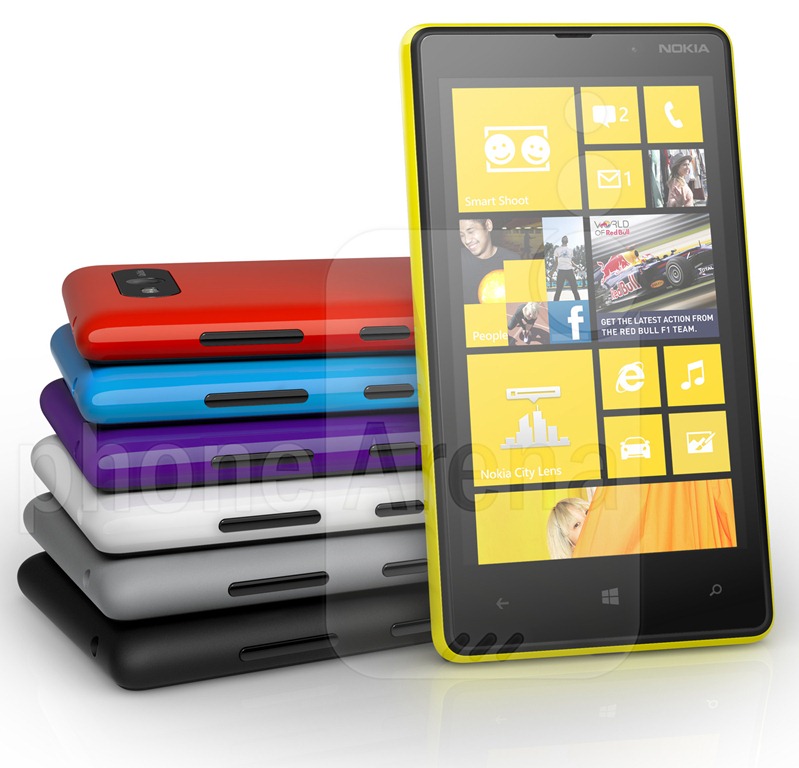
Nokia phone user can design their phone cases

Nokia-Lumia-820-3ad-jpg


Nokia is releasing 3D printing files for its Lumia 820 handset so that owners can create their own covers.
Companies offering interchangeable covers or replacement shells for their smartphone handsets is nothing new, in fact it was Nokia that started the trend back in 1998 with the 5110 -- the first phone to feature Xpress-on covers. This, however, takes customization to a new level.


Writing in a blog post on Nokia Conversations, Nokia says: "We are going to release 3D templates, case specs, recommended materials and best practices -- everything someone versed in 3D printing needs to print their own custom Lumia 820 case. We refer to these files and documents collectively as a 3D-printing Development Kit, or 3DK for short."


In the post, Nokia also claims that it is the first major phone manufacturer to freely hand over these files but, as 3D printing starts to catch on and becomes more mainstream, it probably won't be the last company to do so.


Blowfish12@2012 blowfish12.tk Author: Sudharsun. P. R.

[Updates]Electronic Devices banned on certain flights

Lithium-ion battery device are banned on certain flights starting this Monday after Boeing 787 fires”

UPDATED 1/20/2013: It appears  that  the ban only affects cargo. This story has been updated to reflect new information.

Just a few days ago, flights across the globe were canceled as concerns mounted over the January 7 Boeing 787 lithium-ion battery fire at Boston’s Logan International Airport. But starting Monday next week, you might not even be able to take your laptop, phone, or tablet onto some airlines’ flights, according to one expert.

“I received an IATA notification yesterday saying that Cathay Pacific is stopping all shipments of lithium-ion and lithium batteries on cargo aircraft,” battery quality assurance expert Kevin Elsdon told me tonight. “And then another one saying that British Airways was banning the shipment and carrying of lithium and lithium-ion batteries, period.”


Unfortunately, just about any electronic device you carry and use — your computer, your tablet, and your phone — uses a lithium-ion battery.

From reading a recent IATA statement, it appears the ban may apply only to batteries in cargo, and not batteries carried by passengers in devices such as tablets, phones and other computers — or even as spares. Here is the relevant text from that document; see bold (which we’ve added) for the part about how the prohibition does not apply to batteries contained in “equipment”:
. Lithium metal cells and batteries are prohibited from
carriage as cargo on Cathay Pacific Airways passenger and cargo aircraft. This applies to Section IA, IB and
Section II of Packing Instruction 968.
This prohibition does not apply to:
lithium metal cells and batteries packed with or contained in equipment (UN 3091) in accordance with PI
969 and PI 970 and lithium ion cells and batteries (UN 3480 and UN 3481) in accordance with PI 965 to PI
967; or
• lithium batteries (rechargeable and non-rechargeable) covered by the Provisions for Dangerous Goods
Carried by Passengers or Crew (see 2.3.2 to 2.3.5 and Table 2.3.A)

Also, this cargo ban seems to be limited to Cathay Pacific flights. The statement, originally published in December, is edited in yellow, with no specific date — thus adding to confusion about whether this is the latest version of the document.

Moreover, if you check the aforementioned “Provisions for Dangerous Goods Carried by Passengers or Crew,” you’ll find the reference to spare lithium batteries being allowed as carry-on as well.  Here is the key wording from those provisions:
You may have “Lithium ion battery powered equipment containing batteries over 100 Wh but not exceeding 160 Wh.” as carry-on, in checked-baggage, and on ones person.

You may have “Spare lithium ion batteries with a Watt-hour rating exceeding 100 Wh but not exceeding 160 Wh for consumer electronic devices. Maximum of two spare batteries may be carried in carry-on baggage only. These batteries must be individually protected to prevent short circuits.” Note that these are not permitted in checked baggage.

IATA is the International Air Transport Association, the trade association for most of the world’s airlines. IATA sends out bulletins regarding policy changes and updates for its member airlines to companies which manufacture, handle, and ship hazardous materials, one of which Elsdon works for. He asked that the name of the company not be revealed, as its client list includes defense agencies.

However, a British Airways PR representative that I contacted said there has been no change to airline policy regarding smartphones, tablets, or laptops, and asked to see the IATA notification. The representative did say that it was conceivable that a change had been made to British Airways’ cargo-carrying regulations — in addition to its passenger service, the company runs IAG Cargo, a commercial cargo shipping service – but had no personal knowledge of any changes as of early Sunday morning.

But in any case, “that is entirely separate,” the representative told me.

Elsdon had posted on Facebook that the ban would mean no iPads, no smartphones, and no laptop computers. In other words, it would be complete reversal of the last decade of in-flight electronics policy. And a recipe for very, very long flights, not to mention irate customers.

The Boeing 787 fire at Logan International was probably caused by an overcharge event in the aircraft’s lithium-ion batteries that power the plane’s electrical systems when on the ground. This is the first time that lithium-ion batteries have ever been used in a commercial aircraft, according to the battery manufacturer’s website. Overcharging any battery can cause overheating or even fires, but batteries are supposed to be designed with safety circuits containing an over-voltage cutoff. Somehow, apparently, that got missed in this battery.

Not all airlines — even cargo airlines — are adopting the new procedures. Fedex is the largest dangerous goods shipper in the world, and that company has no plans to change its rules.

“I talked to the head of their dangerous goods division and he shrugged this shoulders, says ‘I guess that means more money for us,’” Elsdon said.

And while it’s likely that any ban would be revised at some point, some people may be caught in the crossfire:

“My dad is back in England at a funeral,” Elsdon told me. “He has his laptop and iPhone, and I’m hoping he’ll be able to get them home.”

Lithium-ion batteries are listed as dangerous goods on Cathay Pacific’s and other airlines’ websites, and have been the cause of recalls for other products such as Fisker Automotive’s Karma electric vehicles. The Chevrolet Volt has had similar issues, and the batteries were blamed for a $5 million fire at a General Motors testing lab last year. Laptops are not immune, as a Dell laptop demonstrated in 2006 by burning and exploding at a conference in Japan.

That said, lithium-ion batteries are in just about everything we use, and are safe when designed and treated well.

“This is what I call a knee-jerk reaction from the airport authority,” Elsdon told me. “The amount of incidents is very small, and 90 percent of them are caused by the people loading them on the aircraft. There are only a very few cases where it’s actually happened in a laptop.”


Blowfish12@2012 blowfish12.tk Author: Sudharsun. P. R.

Tuesday, January 1, 2013

A quick look at HTC Sense 4.1

htc-sense4-1


As usual, HTC is always looking to improve its software to deliver a better experience to its handsets. While the latest AT&T HTC One X  update to Android 4.0.4 had a few minor tweaks, it looks like HTC may soon have another update which will deliver Android 4.0.4 with HTC Sense 4.1. The software has managed to make its way into the hands of a few folks on XDA-Developers who have already turned it around and backed it into a new ROM for the international HTC One X.


Like the update for the HTC One X on AT&T, Sense 4.1 fixes the  “action overflow” feature in Android 4.0 by removing the menu bar that HTC had placed at the bottom of the screen and  allows users to configure the capacitive multitasking button on the device to access the menu functionality within apps. The second main feature is the return of the Quick Settings tab in the notification shade, giving users direct access to handset settings without having to dive into the main settings page or waste valuable screen real estate with widgets.


We expect HTC will be pushing out Sense 4.1 to the HTC One X, One S and One V in the coming weeks. But if you can’t wait that long, we suggest you check in with your favorite ROM developers to see if you can get Sense 4.1 a little sooner.


Other HTC Sesne 4.1 fixes or enhancements


  • Live wallpaper lag has been fixed.


  • Dedicated button in the Camera app to switch between Front/Backward facing cameras


  • Dedicated button to switch tabs in the browser


  • Removal of all 3D-Effects in the launcher


  • Updated kernel with speed improvements


  • Wifi-dropping/ Icon showing weak signal fixes


  • Better Battery life improvement


Blowfish12@2012 blowfish12.tk Author: Sudharsun. P. R.


Monday, December 31, 2012

Laser cookery makes your food more fun

YOUR toast pops up with a strange pattern burned into it. Pointing your phone's camera at the pattern pulls up a website showing the day's traffic news for your commute. Later, as you're wondering how to make a spring roll, you notice the instructions are etched into the rice paper itself.


These are just a couple of the applications of "laser cookery" envisaged by Kentaro Fukuchi and colleagues at Meiji University in Japan. They reckon laser cutters have done their time in industry and, like 3D printers before them, it's now time for them to come into our homes - as a new breed of laser-enabled kitchen appliances.


At a cookery technology workshop in Nara, Japan, in November, the researchers showed how a bench top industrial laser cutter - normally used to cut or engrave patterns in plastic, wood and metal - could generate a variety of fascinating foodstuffs when hooked up to a computer running graphics software and a webcam.


One delicacy they have developed is the charmingly named "melt-fat raw bacon", an allegedly tasty sliver of uncooked bacon on which the fat is cooked by the laser, using a webcam trained on the bacon to guide the beam. "The well-cooked fat and the fresh taste of the meat can then be experienced at the same time," says Fukuchi. Don't all rush at once.


Blowfish12@2012 blowfish12.tk Author: Sudharsun. P. R.


[courtesy] Mobiles are no longer an ‘old person’s nightmare’ thanks to Fujitsu!

Here’s a knee-slapper to kick off your weekend: Fujitsu is marketing a new line of smartphones for the elderly.


Some of the features might be just what the 65-and-older market needs — noise cancellation, larger text, and even speech-slowing for better parsing of fast-talking callers.


At a press conference, Fujitsu president Masami Yamamoto showed off the devices, which feature simplified home screens with just a few apps. They’re as bright and colorful as anything you’d see in a nursery, and they’re designed to be drop-dead simple for anyone who is new to smartphones or needs a little extra help with smartphone technology.


Here’s a sneak peek:


raku raku


These phones are already being sold on Fujitsu’s Japanese home turf; as Yamamoto revealed in the press conference, they’ll now be sold overseas. Fujitsu has plans to bring the phones, called Raku-Raku, into the U.S. and Europe first, with a few modifications for each new geography.


“Raku” is Japanese for “easy.” In 2009, Fujitsu rolled out the Raku Raku PC, designed for senior citizens “or any novice computer user.” The principles behind that device remain the same for the smartphone: Color-coding for ease of use, one-touch apps, highlighting of frequently used features and applications, preinstalled software and apps, and larger fonts.


The company last year rolled out a Raku-Raku feature phone. This marvel gave users a button that, when pushed, would immediately connect users to a dedicated customer support call center.


Blowfish12@2012 blowfish12.tk Author: Sudharsun. P. R.

Friday, December 28, 2012

Santa gets technical: Over 17M iOS and Android devices activated Christmas Day

Christmas Day marked the most iOS and Android device activations than “any other day in history,” according to a report from mobile analytics company Flurry – with over 17 million new smartphones and tablets booting up for the first time.

Compared to the rest of December, new iOS and Android activations soared 332 percent on Christmas Day. Every other day in December only averaged around four million activated devices. It also squarely beat out last Christmas, which only hit 6.8 million devices activated.

Smartphones and tablets are undeniably mainstream and parents, friends, and significant others are seemingly happy to shell out for the technology everyone wants. It helps that a number of new products entered the market in the recent months, including Apple’s iPad Mini, iPhone 5, Kindle Fire HD, Nexus 4, and Nexus 10. The hype and marketing from these releases surely contributed to people’s holiday wish lists.

Interestingly, however, it seems like people think of tablets as a present, as opposed to an every day expense. Throughout December, 80 percent of activated iOS and Android devices were smartphones, whereas on Christmas Day, tablets rushed up and claimed 51 percent of activated devices.

Apps also saw an expected spike on what has now come to be known as Download Day. Compared with the rest of December, app downloads increased by 112 percent on Christmas Day with 328 million apps downloaded overall. Only 155 million apps were downloaded each day in December prior to Christmas.


Blowfish12@2012 blowfish12.tk Author: Sudharsun. P. R.

[virus] Fake Android app can launch DDoS attacks from your phone

Researchers at Doctor Web found a new trojan app in the Google Play store that can launch distributed denial of service attacks when opened.

Android.DDoS.1.origin, as it’s called, is Russian and disguises itself as the Google Play icon once downloaded. When opened, the app takes its victims to the actual Google Play store so as to distract the user. In the background, however, it searches for its command and control server — and if a connection is made, the app sends the infected phone’s number to the criminals. These hackers then administer commands to the app via text messages.

Commands include launching a DDoS attack or sending other text messages. Doctor Web suggests that the text message function could be used to spam others in the phone’s contact list, prompting them to either download the app or something else the hackers are pushing.

Nowadays when we think of DDoS attacks, we often are reminded of Anonymous, the hacker collective that launches a number of these attacks in the name of political protest. We’ve seen DDoS attacks take down a number of important websites including the CIA’s, financial institutions, and others. These attacks send large amounts of traffic toward a certain website’s servers in an attempt to overload the system and shut it down.

With this app, however, hackers with DDoS intentions are roping in innocent bystanders to do the dirty work. This isn’t the first time we’ve seen a campaign like this. In the case of the CIA website’s take down, Anonymous was accused of distributing links on Twitter to low-orbit-ion-canons (LOIC). These “cannons” send thousands of packets of information to a targeted server per second. When the Twitter links were clicked on, unsuspecting visitors would suddenly be roped into the attack.

Doctor Web goes on to say that the app can cause the phone to perform poorly, and can actually run up the owner’s bill by texting premium numbers.


Blowfish12@2012 blowfish12.tk Author: Sudharsun. P. R.

Wednesday, July 25, 2012

Cyton Gamma robot arm to work with humanity

Ready to hold hands with a robot arm? Lighter than a laptop, this articulated mechanical limb "is not just another robot for roboticists," says Robai.


A new robot arm extends its manipulator in a gesture of friendship. Will you shake it?


Philadelphia-based robotics firm Robai hopes so. The latest of its Cyton robot arms is the Cyton Gamma, and it's designed to work with us meatsacks.


The Gamma's seven joints are "kinematically redundant," Robai says in a release, meaning it can move various ways to position itself. This gives it more dexterity.


The increased workload on the control system is handled by Actin, software from Energid Technologies that was developed for robots at NASA. The system uses a simple 3D graphical interface.


The Cyton Gamma weighs 4.4 pounds and has a reach similar to the human arm. It connects to Linux, Windows, or OS X systems via USB. Aside from programming with the GUI, it can be "trained" by being physically moved in space.


It also has support for ROS, the common robot programming framework being developed by Willow Garage.


"Our obsession has been on ease of use. We want the Gamma to be the first accessible robot on the market," Robai COO Neil Tardella says in the release. "This is not just another robot for roboticists."


It's been tested in applications such as remote inspection, manufacturing, and healthcare, according to Robai. The firm's Web site lists the Cyton Gamma MX-2 for $9,799.


The company's other arms have been used to test U.S. Army battlefield robots and to check under cars for dangerous objects.


What would you do with a robot arm?


Tuesday, July 24, 2012

Fact for the day; 24-07-2012

CD-ROM XA (Compact Disk-read-only memory, extended architecture) is a modification of CD-ROM that defines two new types of sectors that enable it to read and display data, graphics, video and audio at the same time.


The first optical data storage disk, developed by Philips, had 60 times the capacity of a 5.25 inch floppy disk.


Though the highest possible encryption in Windows 2000 was 128 bit, Microsoft only sent the 40-bit version to India, because India was under US sanctions after Pokhran.


WinPad was Microsoft's failed handheld PC operating system, which it developed and killed before coming up with Windows CE, Microsoft scrapped the WinPad project reportedly because they couldn't figure out how to squeeze a variant of Windows into an affordable handheld size.


Blowfish12@2012 blowfish12.tk Author: Sudharsun. P. R.

Monday, July 23, 2012

Fact for the day: 23-07-2012

Many Nokia phones come with a reserve battery. To activate the battery, key-in *3370# your cell will restart with this reserve and your instrument will show a 50% increase in battery. This reserve will get charged when you charge your mobile next time.


The name Epson for the popular brand of printers was coined when the subsequent models of their first printer 'Electronic Printer 101' were called 'Sons of electronic Printers'


A CD-RW disk can, in general, be-written about a thousand times. In contrast, a hard disk can be written over virtually an unlimited number of times.


When desktop scanners were first introduced, many manufacturers used florescent bulbs as light sources.


Blowfish12@2012 blowfish12.tk Author: Sudharsun. P. R.

The spacebar is pressed 6M times a second & other crazy typing facts (video)

How many times do you tap characters on your keyboard a day? Which letter do you press the most? A new video from popular YouTube channel Vsauceexplains these and more.


The video reveals which letter is pressed is most often, how many calories you burn an hour by typing, how many text messages are sent a day, and more. Not only do you get to find out all kinds of crazy typing facts, the video also links back to other cool things related to typing, including the real-time heat map of your keystrokes and great free software for tracking your keystrokes and clicks.


Check out the thoughtful video below:


Blowfish12@2012 blowfish12.tk Author: Sudharsun. P. R.


Thursday, July 19, 2012

Fact for the day: 19-07-2012

The Dilbert Zone was the first comic website on the Internet.


Sixteen times a second is the fastest a key can be pressed on a keyboard or controller. Toshuyuki Takahashi, a Japanese, is the record holder.


A PlayStation 3 Blu-ray disc can hold up to 20 GB of data or the equivalent of about 2000 Nintendo 64 game catridges.


Nintendo was originally founded in 1889 as a maker of playing cards.


In 1971, Intel launched the world's first single-chip microprocessor, the Intel 4004. The Pioneer 10 spacecraft used the 4004 microprocessor.


Blowfish12@2012 blowfish12.tk Author: Sudharsun. P. R.

Wednesday, July 18, 2012

Fact for the day: 18-07-2012

When the CD was being designed, Sony and Philips were instrumental in deciding how long each CD could play. Beethoven's Ninth Symphony was used as a standard, the performance of which lasted for 74 minutes.


When Windows 3.1 was launched, 3 million copies were sold in the first two months.


Windows 95 can officially run on a 386DX at 20MHz with just 4MB of RAM.


The Japanese version of MS Office has a character you can't find in any other version. The 'Office Lady' is a virtual assistant that bows and serves tea.


The Windows 95/98 logos were created with Freehand on a Macintosh.


Blowfish12@2012 blowfish12.tk Author: Sudharsun. P. R.

Tuesday, July 17, 2012

Kinect keeps your body-mounted projector steady

Are you the kind of person who likes to give your colleagues (or any friends you may have left) a PowerPoint presentation at the drop of a hat? If so, you could be a prime customer for the Kinect-powered wearable projectorthat's being developed by Sven Kratz and colleagues at the University of Munich in Germany.


Called the Attjector - short for attention projector - their shoulder-mounted system is designed to project slides onto a wall at precisely the point your attention is focused. It does so using a microchip-based picoprojector to deliver a bright image of your bullet points, holiday snaps or pet pictures sent via Bluetooth from a PowerPoint style app on a phone.


But how does it know where to project the image? Enter Kinect, the contactless, gesture-based interaction system from Microsoft.


The projector is mounted on a movable motor-driven gimbal (see it being tested here) so that its projection direction can be steered to where you need it. A Kinect depth camera, mounted beside the projector seeks out the image of your hand and dominant fingers as you point out key facets in your presentation - and drives the gimbal motor to ensure the projection is always pointed to the area where your hand is gesturing.


Why do this? Kratz and colleagues say that holding a phone projector with one hand while pointing at a presentation with the other creates a wobbly mess - and that auto-tracking with Kinect sorts this out. It may have all the makings of a solution in search of a problem, but the Munich team are confident the idea has legs. Or shoulders. They'll now use a headset to monitor eye-gaze to further refine the Attjector's ability to focus on your attention point.


Presented at The First Workshop on Kinect in Pervasive Computing, held in Newcastle, UK, in mid-June, Attjector builds on ideas like Microsoft Research's astonishing LightSpace system, which allows users to "pick up" parts of a projected presentation as a dot of light in their palm - and place it magically elsewhere in a room.


Blowfish12@2012 blowfish12.tk Author: Sudharsun. P. R.


Infolinks In Text Ads